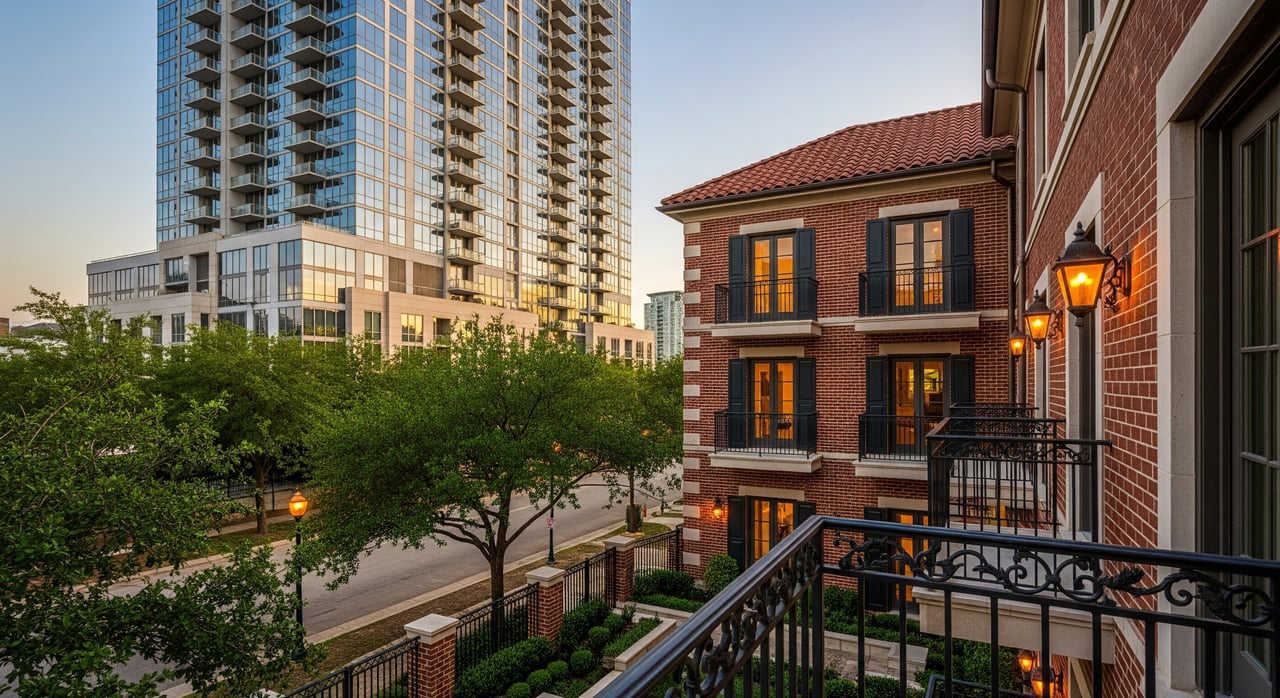
Are you deciding between a high-rise or a mid-rise in River Oaks? You want the right mix of service, privacy, and low-maintenance living close to great restaurants and daily conveniences. This guide breaks down what matters most in River Oaks and adjacent Upper Kirby so you can choose with confidence. You will see how amenities, fees, security, noise, views, walkability, flood resilience, and resale stack up, plus you get a simple decision framework and checklist. Let’s dive in.
Who each option fits
High-rise fit
If you value full-service convenience and a hotel-like experience, a high-rise often delivers. You typically get staffed lobbies, concierge help, and a broader amenity set. Downsizers and busy professionals who want turnkey living often prefer this model.
Mid-rise fit
If you prefer a quieter, boutique feel with fewer neighbors and simpler operations, a mid-rise may be the better fit. You still get comfort and style, but with more self-service and often lower dues compared with full-service towers.
Amenities and services
High-rise highlights
- 24/7 staffed lobby or concierge and visitor screening
- Valet or attended parking, package rooms, and on-site management
- Larger fitness centers, pools, lounge or club rooms, and guest suites
- Frequent city or tree-top views from higher floors
Mid-rise highlights
- Smaller on-site staff, sometimes manager-only or part-time front desk
- Assigned garage or surface parking, simpler common areas
- Modest fitness rooms and pools, more resident self-service
- Often a quieter, boutique environment
What it means for you: high-rises maximize convenience and service. Mid-rises can offer luxury in a more intimate setting without a heavy staffing model.
Fees and operating costs
HOA dues vary widely by building, age, and staffing. High-rises typically carry higher recurring costs due to concierge and valet teams, elevator and mechanical systems, and building-wide utilities. Mid-rises often run leaner budgets with fewer staff and simpler systems.
What to check before you buy:
- The association budget, reserve study, and recent meeting minutes
- What dues cover vs what you pay separately, including electricity, cable or internet, and insurance
- Any recent or pending special assessments and planned capital projects
Compare apples to apples. Evaluate similarly sized units with similar amenity sets before deciding what fee level makes sense for you.
Privacy and security
High-rises have more residents and foot traffic, yet controlled lobbies, concierge screening, and elevator access systems can create a strong sense of security for your floor and unit. Mid-rises typically have fewer neighbors and quieter corridors. They may rely on simpler access controls with less on-site staffing.
If you want quick help and formal screening at the front door, high-rise security is attractive. If your priority is fewer neighbors per floor and a calmer hallway, a boutique mid-rise can be appealing.
Noise and acoustics
Street noise and building noise differ by location and construction. In River Oaks and Upper Kirby, buildings near Westheimer or Kirby Drive can experience more street activity. High floors in towers often rise above street noise, though mechanical sounds from elevators or rooftop equipment may be more noticeable in some spots. In mid-rises, noise can relate to garage or trash room proximity on lower floors.
Construction quality matters. Concrete floor systems and insulated exterior walls usually reduce sound transfer better than wood-frame construction. During due diligence, review floor plans for bedroom adjacency to corridors or mechanical shafts and look for any sound concerns in recent HOA minutes.
Views and daylight
High-rises shine on sky views, daylight, and privacy from neighboring buildings, especially on upper floors. Those floors may carry premiums and require longer elevator rides, and larger window walls can increase solar gain and cooling needs.
Mid-rises can offer generous windows, terraces, and courtyard outlooks, often set on quieter streets. You may trade panoramic skyline views for easy balcony access and a closer connection to outdoor space.
Walkability and location
River Oaks and Upper Kirby offer some of Houston’s most walkable pockets. Towers often sit directly along active corridors with restaurants, retail, and offices. Boutique mid-rises may be tucked into quieter streets within a short walk of the same amenities.
Consider your daily routine: grocery stops, fitness, dining, and cultural outings. River Oaks Shopping Center and Upper Kirby restaurants are common targets. Memorial Park is a quick drive or bike for many, and proximity to the Texas Medical Center and downtown makes commuting easier for professionals.
Flood and resilience
Houston is flood-prone, and risk varies by parcel. In River Oaks, some areas sit at relatively higher elevations, yet flood exposure still depends on each building’s design and finished floor height. Mid-rise garages at grade can be more vulnerable to stormwater. High-rises that elevate living areas and protect mechanical rooms can perform differently in storms.
What to ask and review:
- FEMA Flood Insurance Rate Maps and Harris County Flood Control District resources n- Building elevation certificates and any association flood history
- Master insurance policies and whether a separate flood policy is required by lenders
Understanding how parking, electrical risers, and mechanical rooms are protected helps you gauge storm resilience.
Resale and liquidity
In this submarket, strong branding and amenity packages can help high-rise marketability, but inventory can be more plentiful in some cycles. Boutique mid-rises can be sought-after yet niche, which may limit the buyer pool.
Marketability depends on building reputation, location, financial health, and unit layout. Condos generally move slower than single-family across Houston, but River Oaks and Upper Kirby tend to show stronger demand than many areas. Always review recent sales comps, current inventory, rental policies, and association governance before deciding.
How to decide: a simple framework
Rank these in order of importance:
- Service level: 24/7 concierge and valet or lighter staffing
- Acceptable HOA fee range and included services
- Privacy: number of neighbors per floor and building size
- Noise tolerance: street, mechanical, and neighbor noise
- Flood and resilience: garage elevation and protection of systems
- Views and daylight: high-floor panoramas or lower terraces
- Walkability targets: distance to grocery, dining, and daily needs
- Resale and governance: reserves, meeting minutes, and policies
Rules of thumb:
- If you want turnkey living with maximum convenience and accept higher recurring costs, focus on high-rises with concierge and valet.
- If you want a quieter, boutique feel and potentially lower dues and faster ingress and egress, prioritize well-maintained mid-rises.
- If flood risk is a top concern, favor buildings with elevated living areas, protected mechanical rooms, and documented elevation and flood plans.
- If walkability drives your decision, compare exact addresses, not just neighborhoods. Some towers sit right on active corridors, while many mid-rises are a short but calmer walk away.
Buyer due diligence checklist
Use this during showings and contract review:
- Request the declaration, bylaws, most recent budget, year-end financials, reserve study, and 12–24 months of meeting minutes.
- Confirm exactly what HOA dues cover, including utilities, internet, concierge, and exterior or flood insurance.
- Ask about recent or pending special assessments and planned capital projects such as roof, façade, or elevator work.
- Clarify staffing model and hours for concierge, maintenance, and security. Ask if staff are in-house or third party.
- Review parking: deeded or assigned spaces, guest parking, availability of additional spaces, and valet rules.
- Verify rental and pet restrictions and any caps that might affect resale or leasing options.
- Ask about recurring noise issues, disputes, or litigation noted in minutes.
- Review flood history, elevation certificates, and any association flood policy.
- Test elevator performance during peak times and ask about wait times and backup power.
- Identify HVAC type, who maintains it, and the age of major mechanical systems.
- Note the management company and board tenure to assess stability.
Next steps
Choosing between a high-rise and a mid-rise in River Oaks comes down to your lifestyle and comfort with fees, services, and building operations. With a clear set of priorities and the right questions, you can find a home that feels effortless and secure.
If you would like a guided search, document review, and building-by-building insights, connect with Carol Wolfe Properties. Our team pairs local expertise with concierge-level support so you can move forward with confidence.
FAQs
Are HOA fees always higher in River Oaks high-rises?
- Not always, but full-service towers with concierge, valet, and larger amenity footprints typically have higher dues than simpler mid-rises. Compare fee coverage and building financials before deciding.
Which is quieter in River Oaks: a high-rise or a mid-rise?
- It depends on floor, orientation, and construction. High floors in towers reduce street noise but can have mechanical sounds. Mid-rises may have fewer neighbors per floor yet be closer to garage or street activity on lower levels.
Do high-rises reduce flood risk in Houston?
- Elevated living areas can help, but overall risk depends on the site and building design, including garage elevation and protection of mechanical rooms. Review flood maps and elevation documents for the specific building.
Are high-rise condos better for resale in Upper Kirby and River Oaks?
- Strong branding and amenities help, yet resale depends on location, financial health, and unit layout. Boutique mid-rises in prime spots can also sell well. Review recent comps and association documents.
How important is a reserve study for a River Oaks condo building?
- Very important. A current reserve study shows how the association plans for future repairs and replacements, and it helps you gauge the risk of special assessments.