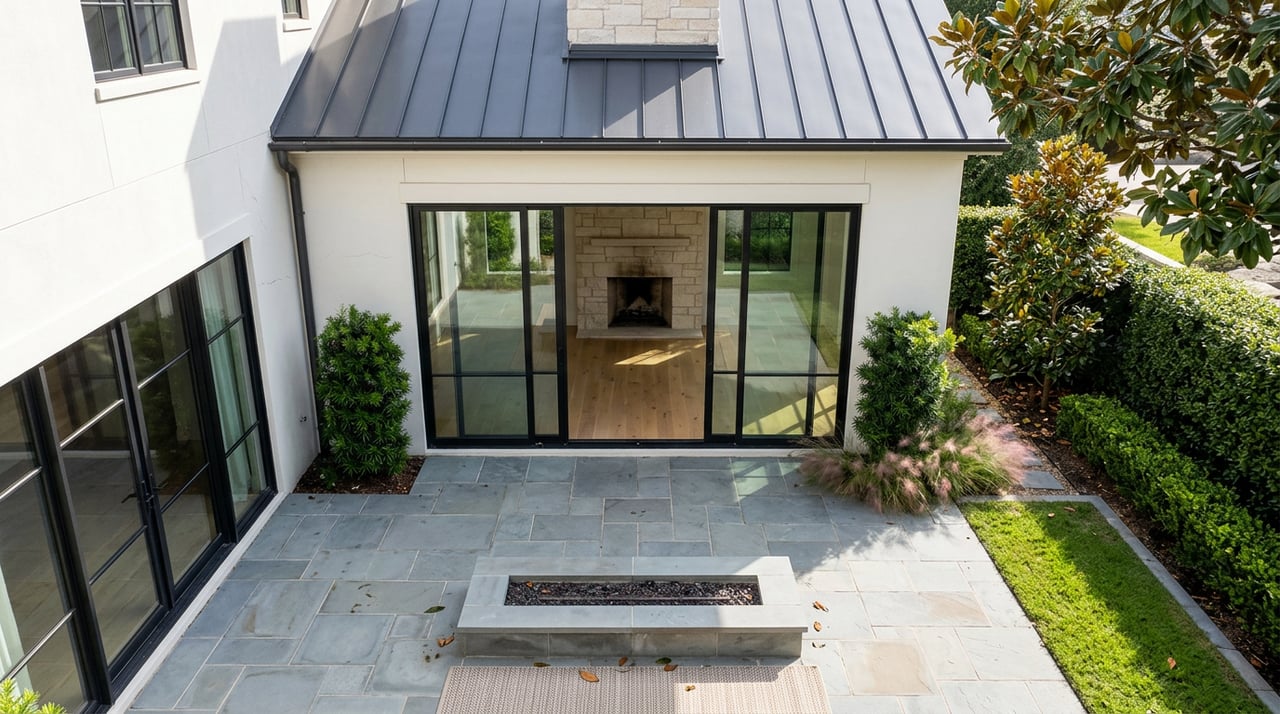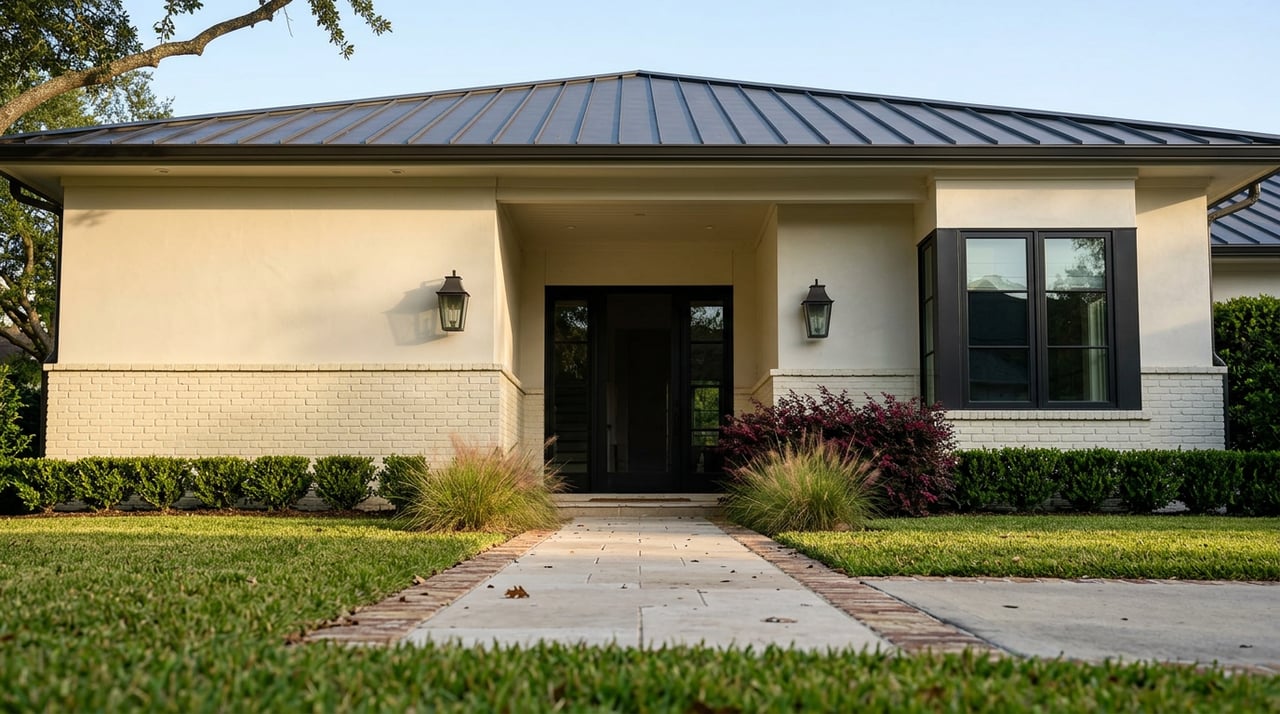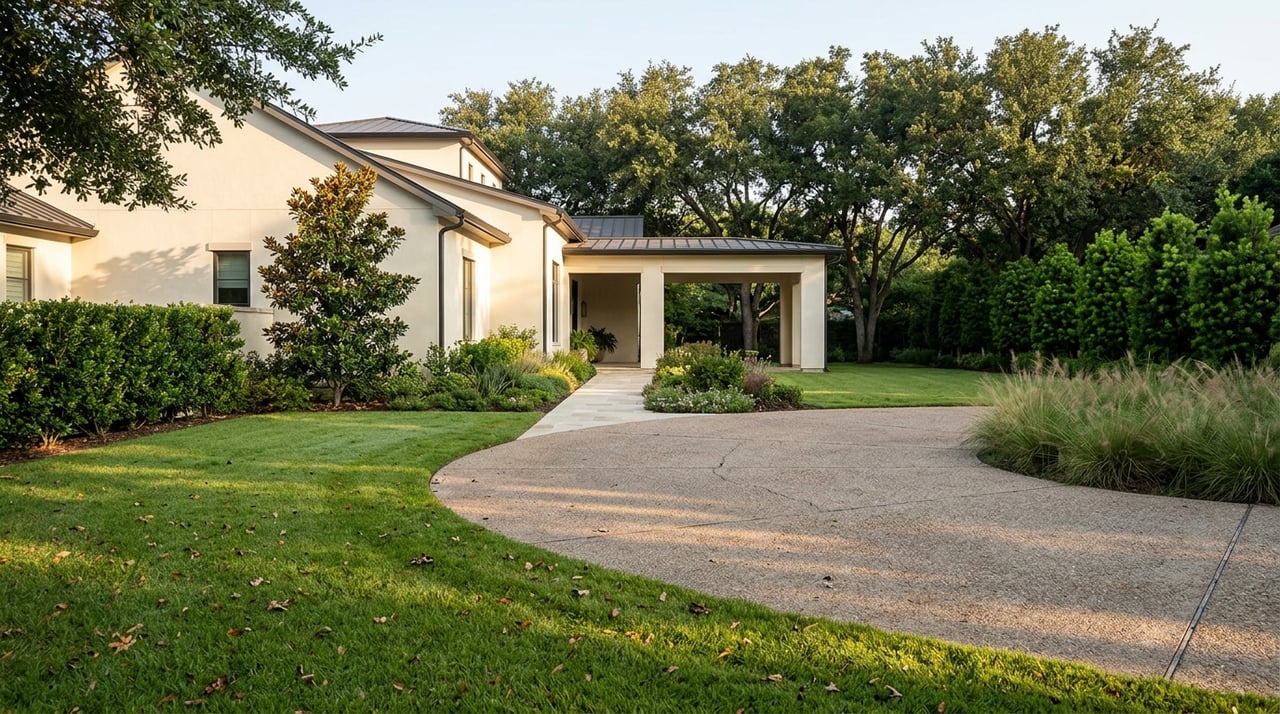
"I absolutely hate the style and inside decor."
That's how Houston trial attorney Tony Buzbee described the 15,000-square-foot mansion he bought next door to his own home this August, for a reported $15.5 million. He wasn't buying the house. He told the Houston Chronicle he plans to tear it down, have the ground blessed, and build a pool house and garden in its place.
Most real estate stories about River Oaks lead with the price tag and stop there. This one is worth sitting with a little longer, because it tells you something the price tag alone can't: in this neighborhood, the structure on a lot is frequently the least relevant number in the transaction. What buyers are actually paying for is land, adjacency, and the right to build what they want, subject to a review process most people from outside Houston have never encountered.
The house was never the product
Acre-plus lots inside River Oaks' deed restrictions can carry $4 million to $7 million in land value alone, before anyone breaks ground on a house. Tear-downs trading at $3 million or more are common, and the reason is straightforward: builders and buyers price the deal against the land underneath, not the structure sitting on it. As of mid-2026, roughly a quarter of recent River Oaks sales have involved a tear-down and rebuild.
That math changes how you should read a listing. A 1970s ranch on a Section Two lot and a decade-old custom build on the same size lot can carry a similar price, because the house is functioning as a placeholder on the parcel rather than the reason someone is buying it. This is also why inspection contingencies are frequently waived on land-value purchases in River Oaks, and why a 30- to 60-day close is considered normal even at these prices. Nobody is negotiating over the water heater when the water heater is going in a dumpster.
Where the land value actually sits
Not every street in River Oaks carries the same math, and the differences are wide enough to change a buyer's strategy entirely.
| Location | Typical price range (mid-2026) | What's driving it |
|---|---|---|
| Lazy Lane, Inwood, Del Monte | $8M to $25M | Largest lots, deepest setbacks, closest to the country club |
| The boulevard (Westheimer to Buffalo Bayou) | Top of the market | Original John Staub-designed estates, extremely limited turnover |
| River Oaks Section Two, west of Willowick | $2M to $6M | Renovated historic homes, smaller lots, more approachable entry point |
A buyer chasing a teardown play on the boulevard is competing for a small number of irreplaceable lots against people who already have generational wealth tied up next door. A buyer working the Section Two side streets is looking at a real, if still expensive, entry point where a rebuild pencils out without needing eight figures in land value to justify the project.
Houston has no zoning. River Oaks decided that wasn't optional.
Here's the part that catches buyers moving from other cities off guard. Houston is famously one of the largest American cities without a formal zoning code, which normally means a much looser relationship between what a city will let you build and what your neighbors expect to see. That looseness stops at River Oaks' boundary. The City of Houston's own planning department explains that in neighborhoods without zoning, deed restrictions carry the regulatory weight a zoning board would handle elsewhere, and in River Oaks that weight is carried by the River Oaks Property Owners association, known locally as ROPO.
ROPO's deed restrictions date to the 1920s and are still actively enforced today. They cover setbacks, height, materials, and tree preservation, and that enforcement is a meaningful reason the mature oak canopy along the boulevard has survived a full century of redevelopment pressure. Before any new construction or substantial renovation can begin, plans go through ROPO's Architectural Control Committee. The review isn't limited to the house itself. According to Strong Landscaping's own guidance for River Oaks clients, the same committee reviews plans for patios, driveways, pool decks, and fences, which means even the pool house Buzbee mentioned will need sign-off before a shovel goes in the ground.
Out-of-town buyers used to looser jurisdictions consistently underestimate how much this shapes a project. It's not a rubber stamp process, and it's not optional for a home of this scale.
What actually has to happen before demolition
For a buyer who has decided a lot is worth the land value alone, the sequence generally looks like this:
- Close on the property. With inspection contingencies often waived on land-value deals, this stage can move fast, typically 30 to 60 days.
- Submit to the Architectural Control Committee. Plans, elevations, site layout, and landscaping all go in front of the committee before construction can start.
- Budget the review into your schedule, not around it. This is the step that catches people. The review process is a real line item on the calendar, not paperwork that happens in parallel with other work.
- Pull permits and begin construction. Once approved and permitted, plan on an 18- to 24-month build for a project of this scale.
None of that includes demolition of the existing structure, which has its own permitting and timeline separate from the new build.
The holding cost nobody mentions at closing
There's one more number that matters to anyone planning a teardown, and it has nothing to do with construction. Property taxes in River Oaks run roughly 2.3% to 2.4% of assessed value, in line with the rest of the Houston Independent School District. On a $5 million property, that's $115,000 to $120,000 a year, and filing a protest with the Harris County Appraisal District is a routine part of ownership rather than an exception.
That bill doesn't pause while a house sits empty awaiting demolition or while a new one is under construction for a year and a half or more. A buyer running the numbers on a $4 million land purchase needs to account for six figures a year in carrying costs on top of the build budget, for the full stretch between closing and move-in.
One more detail worth knowing
If you drive through River Oaks looking for a For Sale sign, you won't find one. The neighborhood's restrictions forbid them, which is a small detail that says a great deal about how this market actually operates. A meaningful share of sales here happen off-market, through agents who work the neighborhood directly and know which owners are quietly considering a move before a property ever reaches a public listing. For a buyer specifically hunting land-value opportunities, that off-market layer is often where the real inventory lives.
A few questions before you call your architect
Does ROPO review apply to interior renovations that don't change the footprint? The Architectural Control Committee's review is aimed at new construction and substantial renovations, along with structural exterior work like patios, driveways, pool decks, and fences. Interior-only work that doesn't touch the exterior or the site plan typically falls outside that scope, but any project that changes the building's footprint or exterior should assume review is required.
Is River Oaks zoned differently than the rest of Houston? No. Houston has no citywide zoning code. What functions like zoning in River Oaks is the deed restriction system enforced by ROPO, which is why the review process carries so much weight here compared to unrestricted parts of the city.
How fast can I actually close on a teardown property? A 30- to 60-day close is typical, especially on land-value purchases where inspection contingencies are often waived. The slower part of the timeline comes after closing, during architectural review and the subsequent 18- to 24-month build.
Does the existing house's condition affect the price on a land-value lot? Not much, once a property is clearly being purchased for its land. Pricing tracks lot size and location far more closely than the condition or age of the structure sitting on it.
If you're weighing a River Oaks purchase against the land underneath rather than the house standing on it, the numbers above are the ones that actually move the outcome, not the finish-out photos. Carol Wolfe Properties works this market directly, including the off-market side where much of River Oaks' real inventory changes hands. If you're trying to understand what a specific lot is actually worth before you commit to a rebuild, request a confidential home valuation and get a straight answer before you go further.